Meet Those “Hillbilly Army Cadre People” A Story about Point of View
- Jul 11, 2023
- 5 min read
Updated: Aug 14, 2023
A friend recently mentioned it was too bad Unforgotten Voices didn’t include any interviews with men who served as guards in the camps, the soldiers who stood in the guard towers with guns. He was right. We didn’t get any interviews of former guards, to get their feelings, although many of the stories do mention guards whose presence was very real and threatening, especially to children who were repeatedly warned to stay away from the fences where they might get shot.
The subject of fences and guards with guns was one that caused understandable bitterness—a betrayal, really. Although the government had told the Nikkei they were putting them in camps to protect them from angry citizens, the sight of guards with guns made it evident this was not true‑the guns were pointed into the camps—threatening rather than protecting them.
One of the stories that didn’t make it into the book is about some guards, not in towers, but in an assembly center and then on a train. In hindsight, I wish we did include it since it speaks to how those on both sides of a fence—the boys who were imprisoned and the young soldier boys imprisoning them— changed.
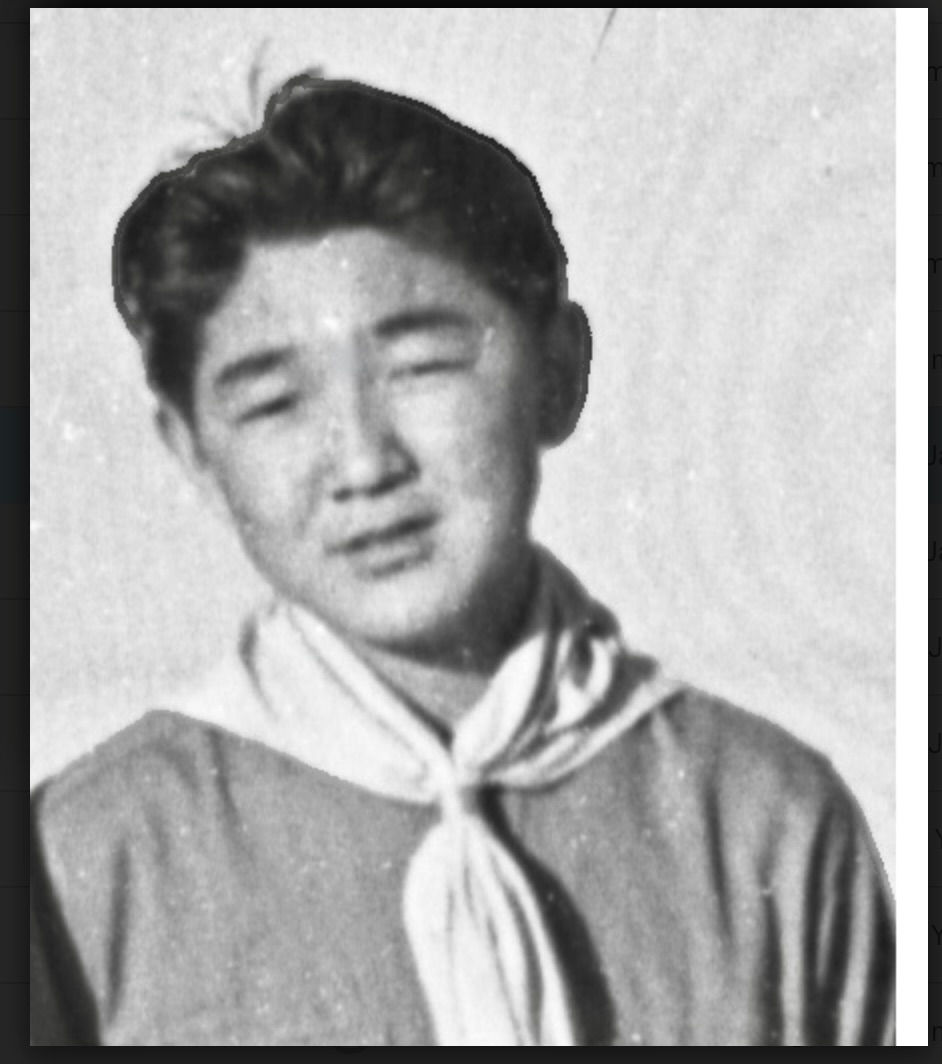
The events in this part of Sutter Kajita's oral history happened early in the war, in the summer of 1942, when they were leaving Walerga, a small assembly center outside of Sacramento. Sutter never uses the word “guards” to describe the young men in his story, but that is what they were...the guards in all the camps were soldiers, members of the United States Army. For Sutter and his pals, this was all new. It’s doubtful that the G.I.s from Tennessee in Sutter’s account, had ever seen Asian Americans before they were charged with handling this crowd. As Sutter retells the events, he tells us how human contact is often the truest antidote.
SUTTER: “As young kids we had to beg for candy from what we used to call — Hillbilly Army Cadre People—I think they were from Tennessee. They all had southern accents and they probably never saw Japanese people before. Anyway, our older brothers were pretty good at kidding around with these people. They weren’t shy at all. These soldiers called us “Japs” and stuff like that and they had a canteen right across [from] the barbed wire fence and they used to sit there looking at us. They were eating their candies and drinking their beer and we used to beg them—“Please give us some candy- we’ll give you money.” Finally, after a few weeks, they started to give us something. Before that it was always “You Japs this,” and You Japs that.” But we’re used to that...it didn’t bother us that much. We were getting that in Sacramento, you know, as soon as the war started. We were getting that kind of racist thing. So, we got a taste of what these soldiers were like – and these were the same soldiers that were on the train that took us to the relocation center. There could be maybe three thousand people, now I don’t know how many were on that particular trip. I think there were four or five trips. In the middle of the train they had a mess hall and a part where you cleaned up the dishes and all; and this is for about three days and two nights. It took forever to get to Tule Lake. It’s on the Northern part of California, near Oregon. And we were all worried- what’s going to happen to us…once we got on the train. Rumors were flying: “Oh, they are going to take us out in a boat and sink it!” All these wild scary rumors. Of course, we were young and making a big deal out of it.
NOTE: RUMORS WERE NOT SO WILD..SOME LETTERS TO THE EDITORS HAD SUGGESTED THAT KIND OF “SOLUTION” FOR DEALING WITH THE NIKKEI.
JOANNE: Did you know where they were taking you?
SUTTER: We knew we’re gong to a place called Tule Lake, the biggest camp of all the ten. I didn’t realize where the other camps were at the time. Each train car had two of the cadre—the army boys to watch us and they were armed now and the racial slurs continued, tremendously strong. They’d say ‘Stay in that room!’; ‘Pull those shades down!’ We’d get near a town and you cannot have the shades up. And at night especially...that was in case of an air attack. I think they didn’t want the people outside to see us in the train.
After about the second day they stopped the train – we all got off right there in a scenic area—near a river and they said everybody get off and they tell us “We want you all to go down to the river--take your shoes off and relax.” But the army guys had their machine guns out and they were facing us! I remember Shorty saying, “Hey what are you guys going to do if we run?”
That was a little scary—I often wondered what would have happened if some crazy kid just happened to start to running? I wondered if those guns were really loaded. I’m pretty sure they were. That was really weird; that’s where all the fears came into play.
So here’s the thing, these so called hillbillies were really getting on us and we used to just stick together and play cards or Monopoly, whatever we can do and they kept coming around saying ‘You Japs this and You Japs that.” And of course, we were hitting them back with ‘You Hillbilly this and You Hillbilly that!’ And they kept staring at us, looking at us like—it was incredible how they looked at us. In the beginning there was a lot of hatred, but as we kept going it got less and less! Then, in the end, they were playing cards with us and yelling at each other, ‘You did this wrong!” And we started to talk about baseball and stuff like that.
By the last day, as we were getting close to Tule Lake, one of the guys came up to us and sat us down and said,“You guys are really incredible. You guys are no different than us. You talk the same as us and your parents are so nice!” I remember this vividly and tears were coming out of his eyes and he says, “Why are we doing this to you people? You’re Americans! This shouldn’t have happened!’ And it was at this early stage in the war, and I thought that’s incredible. I was glad- because up till then there was all this fear of what’s going to happen to us and that helped me—at least for myself.
Sutter Kajita Telephone Interview 3/14/2005
To purchase book:


This piece really resonates—point of view shifts everything when we look back at history. The way Sutter’s memory humanizes both the kids and the young soldiers is a reminder that contact, even across a fence, can soften the hardest lines. It’s a nuanced take that makes you rethink who’s “guarding” whom. For anyone writing or documenting layered stories like this, visual aids can help illustrate those contrasts more vividly. For creators looking to enhance visual content, a Free AI Image Generator can be a practical addition to their workflow. It’s a subtle way to bring archival moments to life without losing the original tone.
https://ball88.dev/ hôm trước mình lướt thấy ai đó nhắc nên bấm vào nghía thử cho biết. Vào cái là thấy giao diện khá thân thiện, kiểu bố cục gọn gàng nên không bị choáng, tìm chỗ cần xem cũng nhanh. Mình để ý phần cược trực tiếp (in-play) được đặt khá nổi, nhìn phát là biết đang có trận nào chạy, tiện cho ai thích canh kèo theo diễn biến. Mấy khối thông tin kèo họ trình bày theo dạng dễ đọc, số liệu không bị dồn đống nên liếc qua là nắm được. Mình không ngồi lâu, chủ yếu xem cách sắp xếp thôi, nhưng cảm giác chuyển mục qua lại khá mượt. Nói chung nhìn ổn ở chỗ…
https://thapcamtv.fund/ mới dạo này mình thấy có người nhắc tới khi nói về các nền tảng giải trí trực tuyến nên cũng thử mở vào xem cách họ bố trí giao diện ra sao. Mình không đi sâu vào nội dung hay từng trò cụ thể, mà chủ yếu quan sát cách các chuyên mục được phân chia trên trang và cách thông tin hiển thị cho người dùng. Nhìn tổng thể thì các khu như thể thao, casino, game bài hay slot thường được sắp xếp theo từng nhóm khá rõ, hiển thị dạng khối và danh sách nên lướt qua cũng dễ theo dõi. Các bảng dữ liệu được trình bày dạng cột khá gọn, giúp quan sát…
https://hitclubhn.com/ bữa mình thấy mấy đứa bạn share nên bấm vào nghía thử cho biết thôi, chứ cũng không đăng ký hay chơi gì. Trang nhìn khá dễ chịu, kiểu chia nội dung thành từng khối rõ ràng nên lướt xuống không bị rối mắt. Mình để ý họ có đoạn giới thiệu là hoạt động từ 2019, đọc cái là biết họ muốn nói thẳng luôn chứ không giấu ở mấy trang con. Menu đặt ngay trên, bấm qua lại mượt, không bị giật hay load lâu. Mấy tiêu đề với box thông tin căn gọn gàng, nhìn tổng thể sạch sẽ, đúng kiểu bố cục chia khối dễ đọc trên trang.
https://luongsontv.llc/ dạo này thấy vài người nhắc nên mình cũng bấm vào xem thử cho biết. Mình không ngồi đọc kỹ nội dung đâu, chủ yếu xem giao diện có dễ nhìn không thôi. Vào cái là thấy trang làm khá thoáng, khoảng trắng vừa đủ nên mắt đỡ mệt, lướt xuống cũng không bị rối. Mình để ý họ chia nội dung theo từng khối rõ ràng, nhìn qua là biết phần nào với phần nào, kiểu gọn gàng chứ không nhồi chữ. Cái mình thích nữa là mấy chỗ trình bày dạng bảng/cột nhìn khá ngay hàng thẳng lối, không bị lệch lung tung. Menu cũng nằm chỗ dễ thấy nên đổi qua lại nhanh, khỏi phải tìm.…